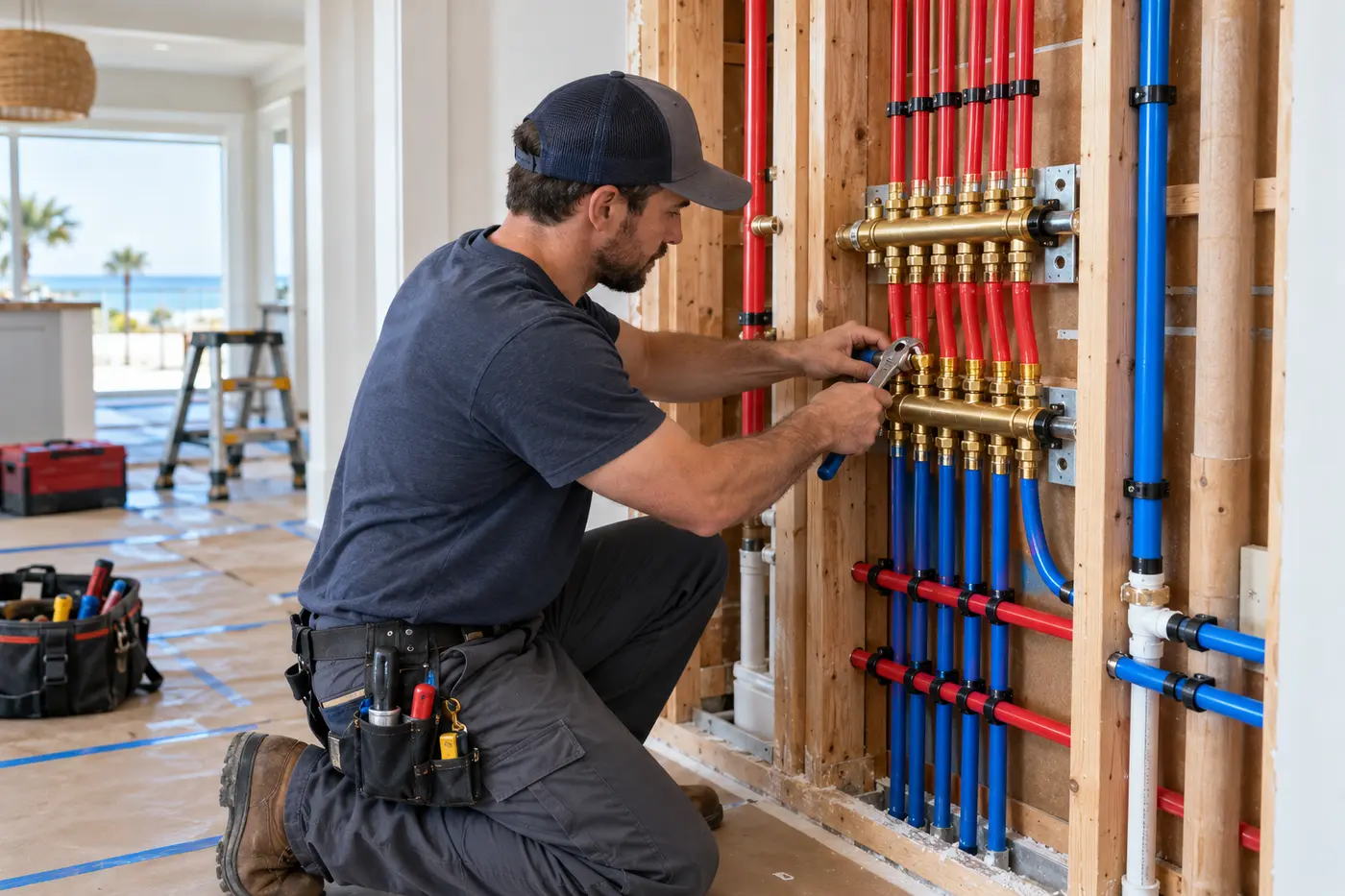
Many Portland homes were built in the 1970s through the 1990s with copper or galvanized supply lines, often running under the slab. Decades later, those lines develop pinhole leaks and corrosion. A repipe runs new lines through the walls and attic, where they are easy to reach for the life of the home.
When a Repipe Makes More Sense Than a Repair
- You have had two or more leaks in different places
- You have had a slab leak and the rest of the pipe is the same age
- Water runs rusty, brown, or metallic-tasting
- Pressure is weak at every fixture
- The home has galvanized steel or polybutylene pipe
- You are remodeling and walls are already open
What Is Included
- Inspection and pressure test of the current system
- A written plan: pipe material, routes, and where walls will be opened
- New lines to every fixture, the water heater, and the main
- New shut-off valves at each fixture
- Permit, pressure test, and city inspection
- Drywall patching to the agreed finish and a final walkthrough
PEX or Copper in Portland Homes
PEX does not corrode, flexes around framing, and needs fewer fittings, so it usually costs less and needs fewer wall openings. Copper is rigid, heat tolerant, and preferred by some owners. Most Portland repipes use PEX inside walls and attics. Read why copper pipes get pinhole leaks.
What Affects the Price
Home size, the number of bathrooms and fixtures, single or two story, attic access, the pipe material, and the amount of drywall to repair. You get an itemized quote after an inspection, not a phone ballpark.
Frequently Asked Questions
How long does a repipe take?
Most single-family homes take two to five working days, plus inspection and drywall repair.
Will my house be torn apart?
No. Openings are planned and kept small, especially with flexible PEX, and are patched at the end.
Can I stay home during the repipe?
Usually, yes. Water is off during working hours and back on most evenings.